

Neurotherapy
Advanced Nervous System Rehabilitation and Brain-Based Care
At WellSpace, neurotherapy is offered as a clinically guided approach to nervous system regulation, cognitive optimization, emotional stabilization, and brain rehabilitation.
Our work integrates psychotherapy-informed care with advanced neuromodulation technologies designed to support the brain and body’s capacity for regulation, flexibility, resilience, and healing.
We understand symptoms not simply as isolated problems, but as expressions of nervous system adaptation.
Neurotherapy offers a way to work directly with the functional patterns underlying anxiety, overwhelm, emotional reactivity, attentional instability, sleep disruption, trauma responses, burnout, cognitive fatigue, mood dysregulation, and stress-related nervous system exhaustion.
Every treatment plan is individualized and may integrate one or several modalities depending on presentation, goals, history, nervous system capacity, and response to care.
What Neurotherapy Can Support
Neurotherapy may support individuals experiencing:
Anxiety and chronic stress
Trauma and PTSD-related symptoms
Nervous system dysregulation
Panic and overwhelm
Sleep disturbance and fatigue
Attention and concentration difficulties
Emotional reactivity and mood instability
Cognitive fog and mental fatigue
Burnout and high-performance stress
Somatic symptoms and nervous system hypersensitivity
Recovery from chronic stress or prolonged activation states
Difficulties with regulation, grounding, or embodiment
Our work is not directed toward symptom suppression alone, but toward improving the brain and nervous system’s capacity for adaptive regulation.
Neurotherapy Modalities
-
![]()
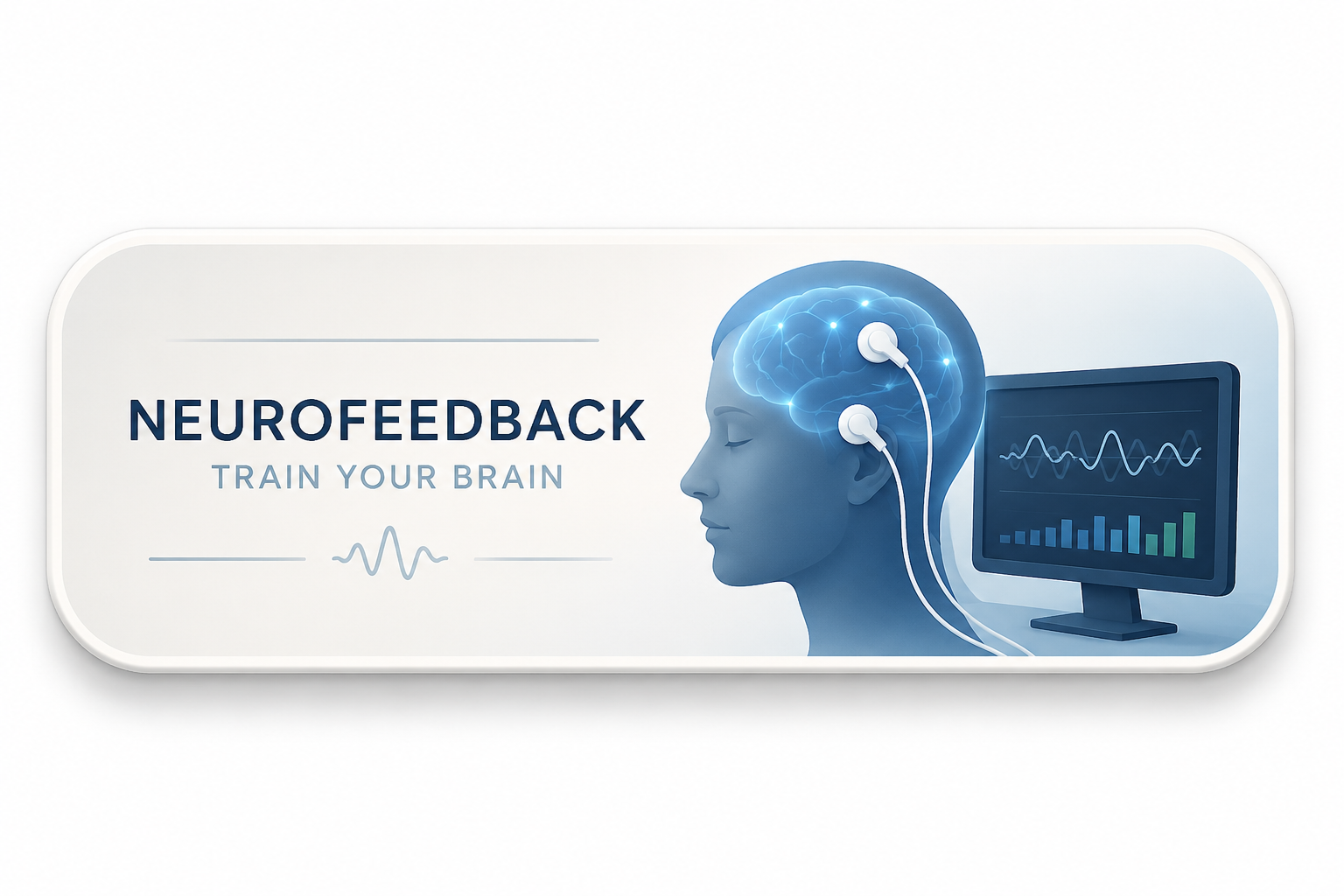
Neurofeedback
Neurofeedback trains brainwaves with whole-person care—breath, body, movement, therapy—to build emotional regulation, resilience, better sleep, mood, attention, and trauma recovery.
-
![]()
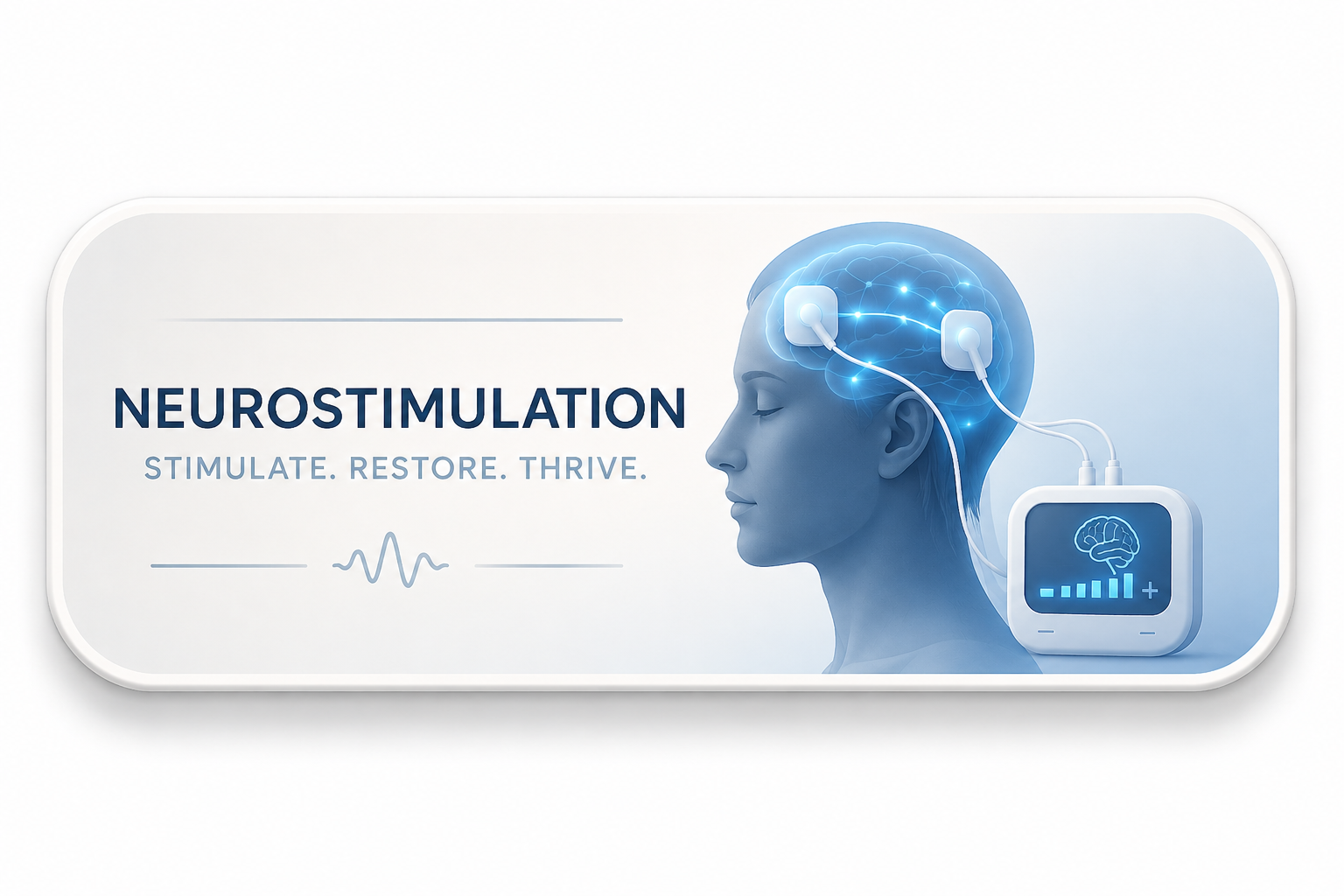
Neurostimulation
Neurostimulation uses mild electrical or magnetic pulses to modulate brain activity, easing symptoms of depression, PTSD, chronic pain, and improving mood, focus, and neural plasticity.
-
![]()
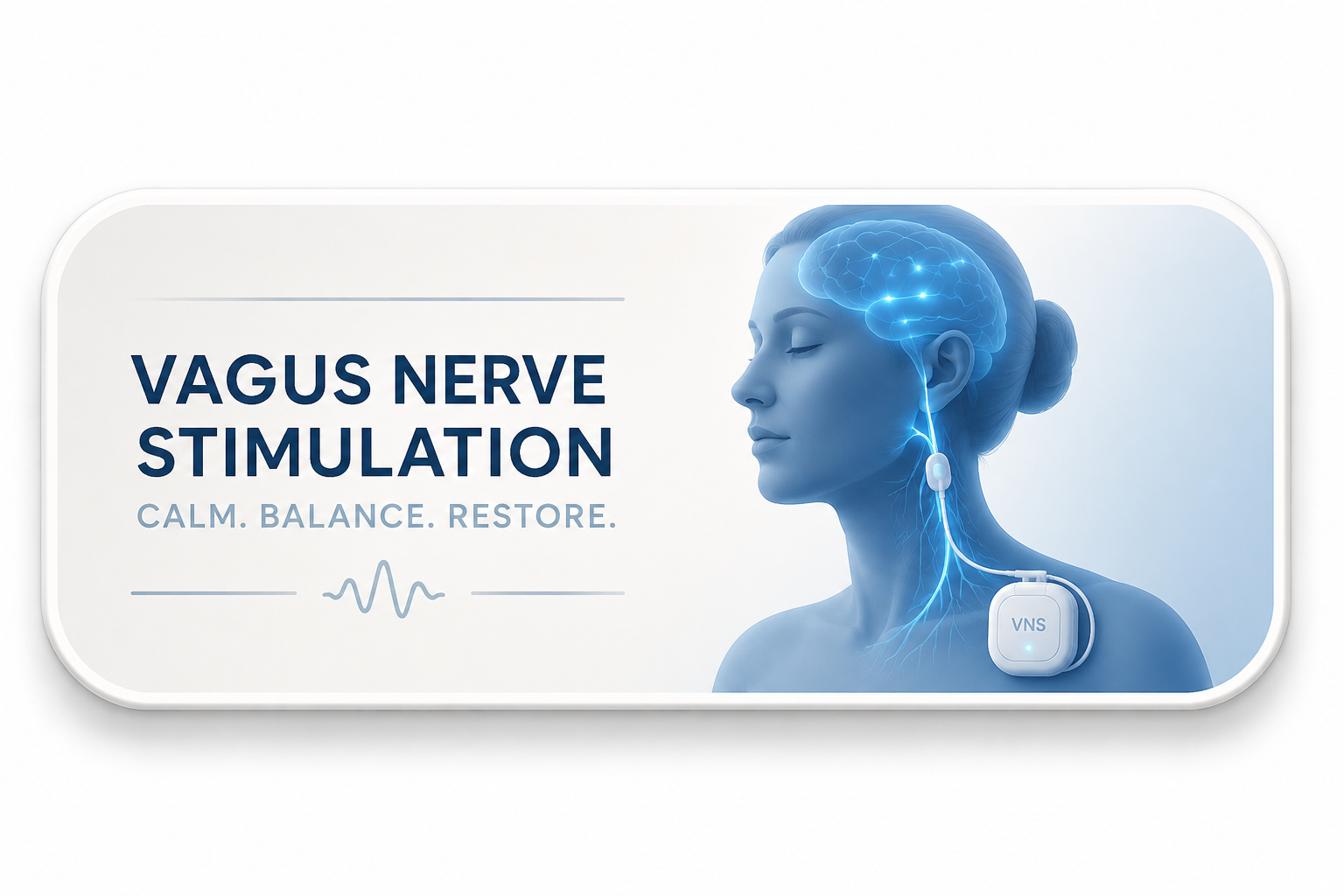
Vagus Nerve Stimulation (VNS)
Vagus nerve stimulation uses electrical or behavioral methods to calm the nervous system, reducing stress, improving mood, easing inflammation, and supporting recovery from trauma and anxiety.
-
![]()
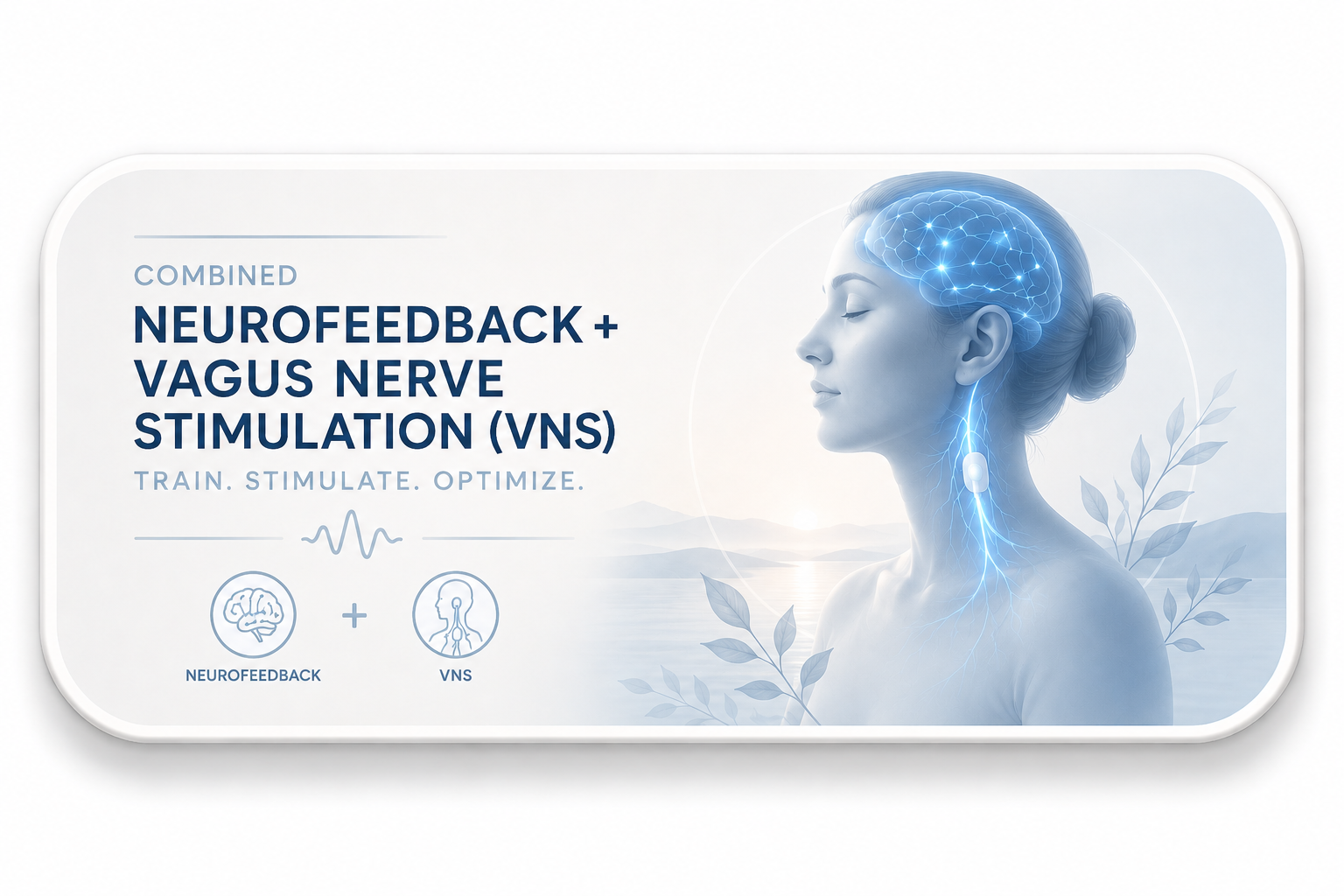
Neurofeedback + Vagus Nerve Stimulation (VNS)
Neurofeedback + vagus nerve stimulation enhance brain regulation and stress resilience by training neural patterns while modulating autonomic balance, reducing hyperarousal and improving emotional stability.
-
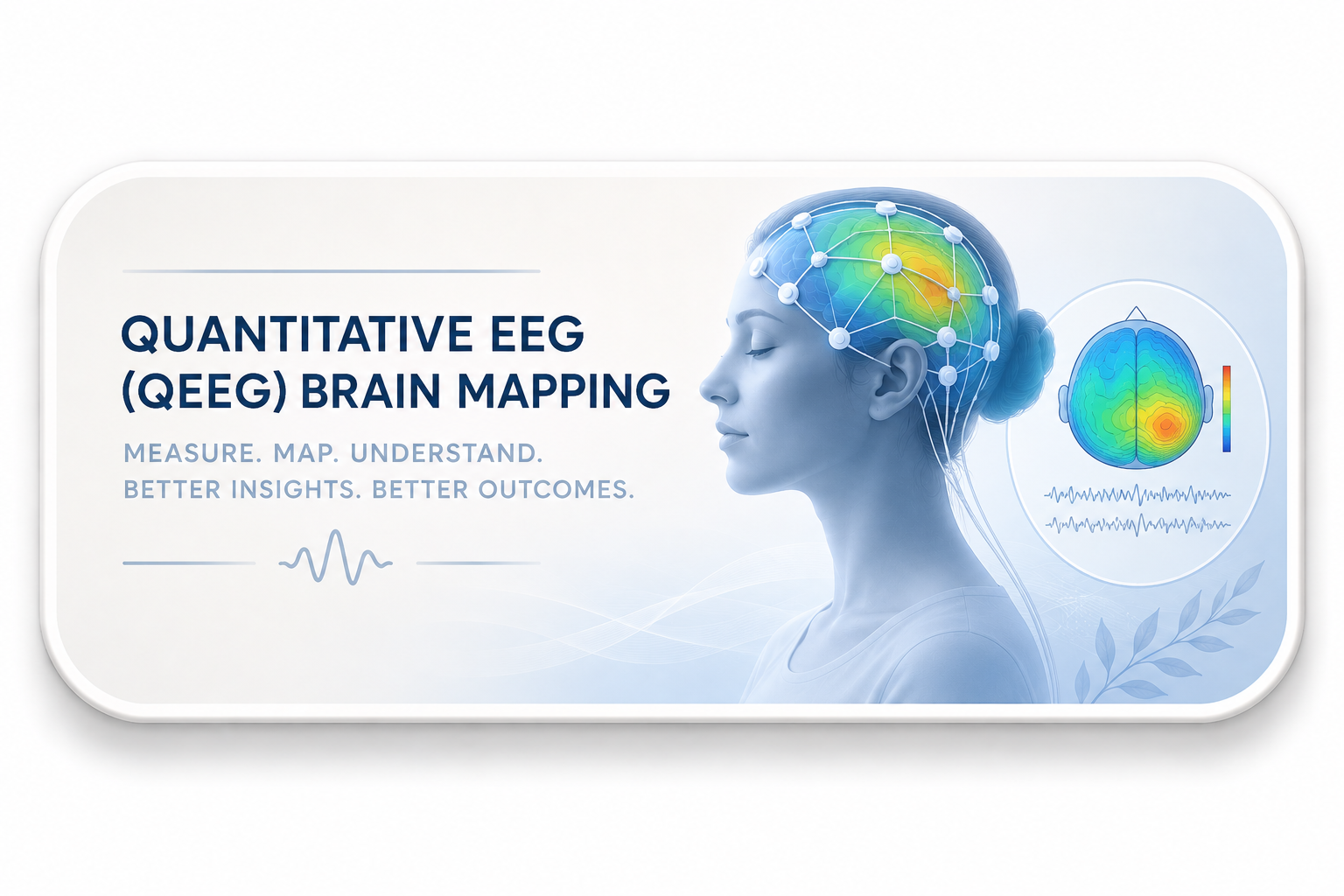
![Quantitative EEG (QEEG) Brain Mapping]()
Quantitative EEG (QEEG) Brain Mapping
Quantitative EEG (QEEG) brain mapping measures electrical brain activity, producing detailed maps that identify dysregulation patterns to guide personalized neurotherapy and track treatment progress.
Neurofeedback
Neurofeedback is a form of brain training that provides real-time information about brainwave activity. Sensors placed on the scalp measure electrical activity while the brain receives immediate feedback through visual or auditory signals.
Over time, the brain learns to shift toward more stable, flexible, and efficient patterns of functioning.
Neurofeedback may support:
Emotional regulation
Attention and focus
Reduction of hyperarousal
Sleep quality
Cognitive clarity
Stress resilience
Recovery from chronic nervous system activation
Treatment protocols are individualized and informed by clinical assessment and, when appropriate, quantitative EEG (QEEG) brain mapping.


How is Neurofeedback performed?
The Neurofeedback trainee sits in a comfortable reclining chair with sensors attached to the scalp and ears.
The sensors measure the brains electrical activity and record it through a computer program.
The trainee watches images on a computer screen while music is played through headphones.
The brains performance is played back to itself, and with the help of the program, the brain is shown when it is forming optimal patterns of self-regulation, and when it is hitting a pattern, or stuckness.
As the brain begins to adapt itself to accomplishing the task, healthy patterns are exercised, excessive patterns are recalibrated, and new neural pathways are generated that improve the brain’s efficiency
VAGUS NERVE STIMULATION with NEUROFEEDBACK
At WellSpace, neurofeedback may be combined with vagus nerve stimulation (VNS) within the same session as part of an integrated neuroregulation approach designed to support both brain function and autonomic nervous system regulation simultaneously.
While neurofeedback provides the brain with real-time information about its own activity patterns, vagus nerve stimulation works more directly with physiological regulation pathways associated with stress response, calm, recovery, emotional stabilization, and autonomic flexibility. Together, these approaches may support more efficient state regulation and nervous system responsiveness.
When used concurrently, these modalities may also exert a complementary and potentially synergistic effect, with vagal support helping create physiological conditions that may enhance the brain’s receptivity to neurofeedback training and adaptive regulation.
This combined approach is intended to support the brain not only in learning more adaptive patterns of functioning, but also in doing so within a physiological environment that may be more receptive to regulation, settling, and integration.
Combined Neurofeedback + VNS sessions may support:
Chronic stress and nervous system overload
Anxiety and hyperarousal
Trauma-related dysregulation
Emotional reactivity and overwhelm
Sleep disruption
Cognitive fatigue and burnout
Difficulties with grounding and physiological settling
Autonomic rigidity and chronic activation states
At WellSpace, these sessions are individualized and trauma-informed, with careful attention to pacing, nervous system sensitivity, and functional capacity. Protocols are adjusted according to clinical presentation, response patterns, and treatment goals.
Clients often describe the combined approach as supporting a greater sense of calm, embodiment, clarity, regulation, and nervous system resilience over time.
Wellspace Toronto Vagus Nerve Stimulation with Neurofeedback
Symptoms affected are:
Anxiety and Panic
Rumination
Hypervigilance
Physical and Psychological Tension
Improvement noted in:
Sleep
Focus
Mood
Energy
Neurostimulation involves the application of low-intensity electrical stimulation to support functional regulation within neural networks. Depending on presentation and goals, stimulation may target states associated with excessive activation, instability, rigidity, fatigue, or dysregulation.
Neurostimulation is utilized carefully and progressively, with attention to nervous system tolerance, pacing, and integration.
Potential goals may include:
Nervous system stabilization
Regulation of arousal states
Improved cognitive flexibility
Enhanced calm and grounding
Improved sleep and recovery
Reduced overwhelm and stress reactivity
Neurostimulation

Types of Neurostimulation
Transcranial Alternating Current Stimulation (TACS)
This technology delivers gentle frequency-based current transcranially or through the body.
Transcranial Direct Current Stimulation (TDCS)
This technology works to deliver gentle levels of direct current to enhance neuroplasticity, foster greater connectivity and break up stuck patterns in the brain.
Transcranial Random Noise Stimulation (TRNS)
This technology delivers a ‘white noise’ effect to the brain, offering multiple frequencies at once so the brain is able to take what it needs. It assists in calming frequencies that are in excess, and in moving the brain out of stuck patterns so it can function in a more balanced and regulated manner.
Pulsed Electro-Magnetic Field Stimulation (PEMF)
This technology delivers very gentle electromagnetic fields transcranially (through the skull) or through the body. It is a painless and effective way of providing the brain with the information it needs to make more of the frequencies in which it is deficient.
A QEEG (quantitative electroencephalogram) or ‘Brain Map’ is a non-invasive process that is solely for the purposes of generating images and data
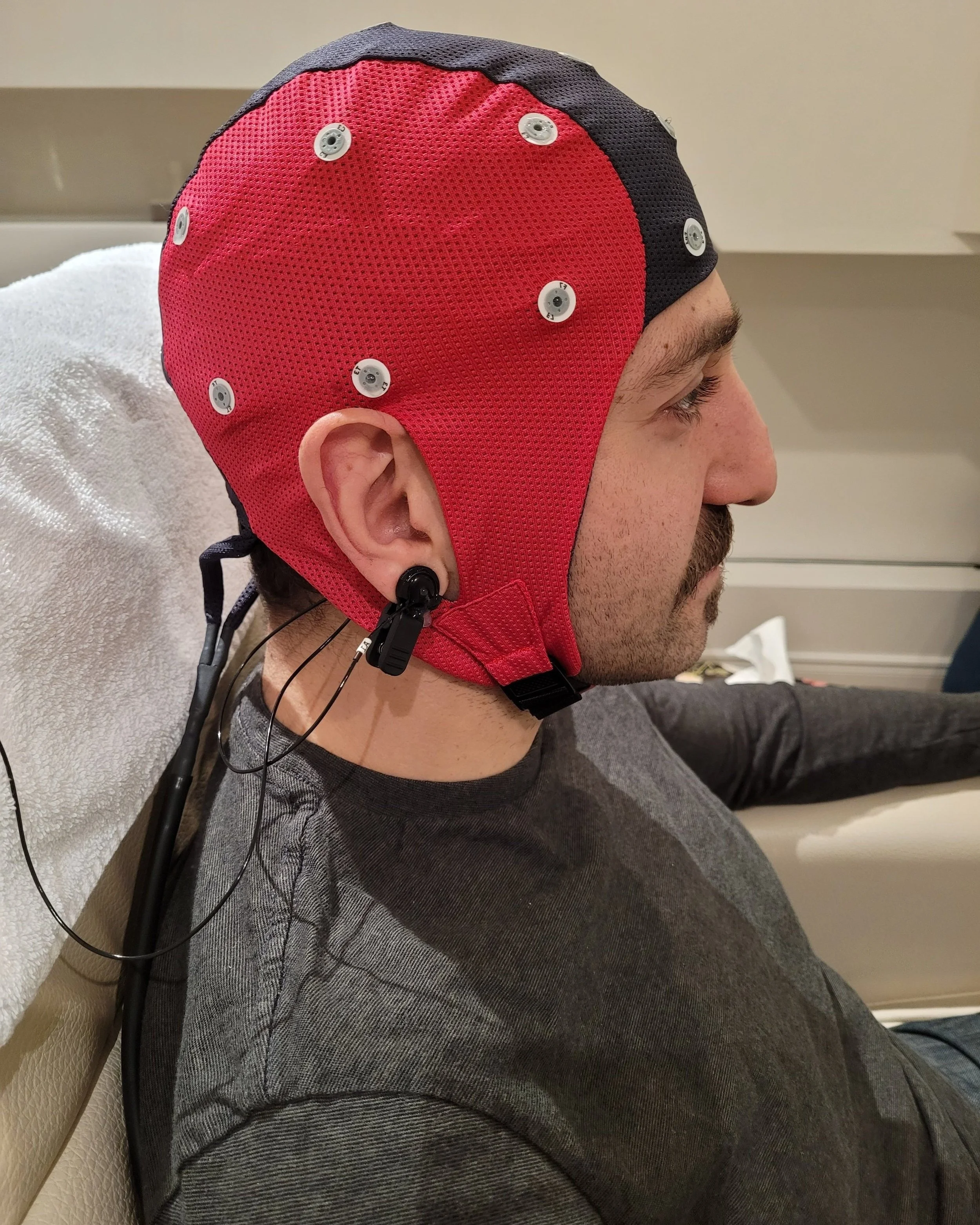
Quantitative Encephalogram (QEEG) Brain Mapping
When clinically appropriate, neurotherapy treatment may begin with a Quantitative EEG (QEEG) assessment.
A QEEG records electrical activity across multiple regions of the brain and compares patterns against normative databases. This information may help identify areas of dysregulation, instability, excessive activation, underactivation, or inefficient processing patterns.
QEEG findings may assist in:
Guiding individualized neurotherapy protocols
Understanding functional nervous system patterns
Tracking progress over time
Clarifying areas associated with stress, attention, mood, trauma, or cognitive regulation
Brain mapping is interpreted within the broader context of each individual’s clinical presentation and lived experience.
Frequently Asked Questions
-
A session usually involves a calm, structured setup where sensors or stimulation equipment are placed comfortably. Depending on the session type, you may receive pEMF-based support, neurofeedback training, or a combined protocol.
The process is designed to be low-effort. You do not need to “perform” or force yourself into a relaxed state. The nervous system is given gentle information and support, then allowed to respond.
-
pEMF and neurofeedback support different layers of the nervous system.
pEMF works more from the body upward by supporting autonomic regulation, vagal tone, and physiological settling. Neurofeedback works more from the brain downward by supporting cortical timing, flexibility, and self-regulation.
Together, they may help the brain and body communicate more effectively, making it easier to rest, focus, regulate emotions, and participate in therapy or daily life with less internal resistance.
-
Neurotherapy is not designed to erase trauma or replace trauma therapy. It does not process memories or replace the relational work of psychotherapy.
Its role is more foundational. Neurotherapy can help support the biological systems that make healing possible by reducing background stress, supporting regulation, and helping the nervous system regain access to calmer, more flexible states.
-
No active effort is required. You can sit comfortably and listen. The system monitors brain activity and provides brief auditory interruptions when it detects changes in stability. These cues allow the brain to notice and adjust using its own adaptive capacity.
-
No. Neurotherapy is an adjunctive support. It is not a replacement for psychotherapy, medication, medical treatment, or care from a licensed healthcare provider.
Many clients use neurotherapy alongside therapy, somatic work, medical care, or other supportive practices.
-
Clients may notice feeling calmer, more settled, more present in the body, less tense, or more spacious internally. Some people report deeper sleep, softer emotional reactivity, improved focus, or a sense of recovery after stress.
Responses vary. Some shifts are subtle at first and become more noticeable over a series of sessions
-
Neurotherapy is usually gradual. It is not a quick fix or a “reset button.” Progress often shows up as small but meaningful changes: sleeping a little more deeply, recovering from stress more easily, feeling less reactive, or noticing that the body does not have to work as hard to stay in control.
The focus is on helping the nervous system rebuild flexibility over time.
-
The goal is not to create a perfect calm state. A healthy nervous system can move between alertness, focus, rest, and recovery as needed.
Neurotherapy supports greater flexibility, steadier internal rhythms, improved vagal tone, and a nervous system that can return to balance more easily after stress.
-
Coverage depends on your provider and plan. Some services may be eligible for reimbursement under extended health benefits, particularly when delivered within psychotherapy coverage. Clients are encouraged to check directly with their insurance provider.